Brake Hose (Rubber)
Original price was: $52.00.$40.66Current price is: $40.66.
86 in stock
Description
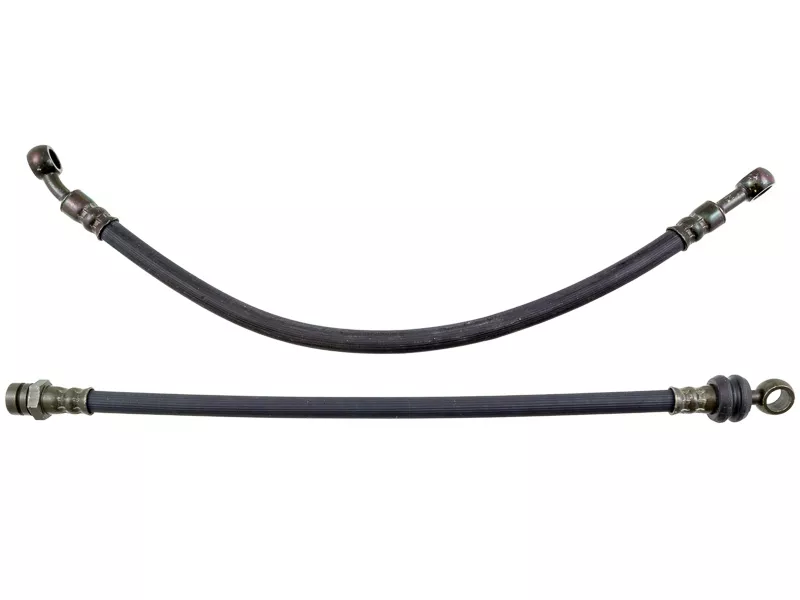
Rubber Brake Hose for Honda CB350G / CB360 / CB450 / CB500T / CB550
Factory-style rubber brake hose kit for the full front hydraulic disc brake system on the vintage Honda twin and four-cylinder lineup. Sold as a complete pair — upper hose + lower hose + six copper crush washers. Same rubber hose Honda used from the factory, made to original dimensions with correct banjo fittings.
Why You Need This
The front brake does most of the stopping on a motorcycle. Rubber brake hoses from a 50-year-old Honda have seen fifty years of pressure cycles, temperature swings, and ethanol-era fuel contamination. They swell under pressure, they crack at the fittings, and they eventually leak fluid where the handlebars rotate. Brake fluid attacks rubber as it ages and absorbs moisture. Any deterioration in the rubber parts — cracking, swelling, or weeping — means replace immediately. A weeping master cylinder seal can fail under hard braking.
This kit is the direct OEM-style replacement. If your bike is still running factory rubber, this is the correct first move. If you want a firmer lever and a cleaner visual, see our Stainless Steel Brake Line alternative.
Specifications
| Spec | Detail |
|---|---|
| Replaces OEM Part Numbers | 45125-379-003, 45126-300-003, 45126-333-000, 90545-300-000 |
| Kit Contents | 1 upper hose + 1 lower hose + 6 copper crush washers |
| Upper Hose Length Options | Factory Bars (shorter) or Superbike Bars (longer) — select at checkout |
| Fits Models | CB350G (1973), CB360G/T (1974–1976), CB450 K3–K7 (1970–1974), CB500T (1975–1976), CB500K (1971–1973), CB550K (1974–1978), CB550F (1975–1977) |
| Brake Fluid Spec | DOT 3 |
| Lever Free Play Spec | 2–5 mm (0.08–0.2 in.) at the tip |
| Sold As | Complete hose kit |
Rubber vs. Stainless Steel — Which One Should You Get?
- Rubber (this kit): matches the factory look, feels the same as original, and is the right answer for a restoration-correct build. Rubber flexes slightly under pressure, which gives the brake lever its original feel.
- Stainless Steel (sibling kit): braided stainless over a PTFE core. Doesn’t flex, so the lever feels firmer and more immediate. Cleaner visual. Our USA-made SS kit includes CB750 fitment that this rubber kit does not.
Installation
Difficulty: Intermediate. A brake hose swap is a full-system service — you’ll drain fluid, disconnect lines at both ends, install new hoses with fresh crush washers, and bleed the entire system.
Tools needed: 10 mm and 12 mm box wrenches for banjo bolts, 8 mm box wrench for the bleeder screw, clear vinyl tubing for bleeding, catch bottle, clean DOT 3 brake fluid, nitrile gloves, rag to protect paint.
- Before starting, protect any painted surfaces near the master cylinder. Brake fluid damages paint on contact.
- Drain the old fluid from the master cylinder using a pipette or by bleeding it out at the caliper.
- Disconnect the upper hose at the master cylinder and at the junction block. Note the orientation.
- Disconnect the lower hose at the junction block and at the caliper hard line fitting.
- Install the new upper hose with a fresh crush washer on each side of each banjo fitting. Crush washers are one-time-use. Tighten snug — the crush washers create the seal, so you don’t need excessive torque.
- Don’t forget the rubber boot on the upper line before threading the banjo bolt. It’s the most commonly missed step.
- Install the new lower hose the same way.
- Fill the master cylinder with fresh DOT 3 brake fluid and bleed the system using the two-stage method (purge lines first, then bleed at the caliper).
- Test the lever. It should feel firm. Free play should be 2–5 mm at the tip. If the lever feels spongy, there’s still air in the system and you need to bleed again.
Related products
-
- Sale!
- hot sale
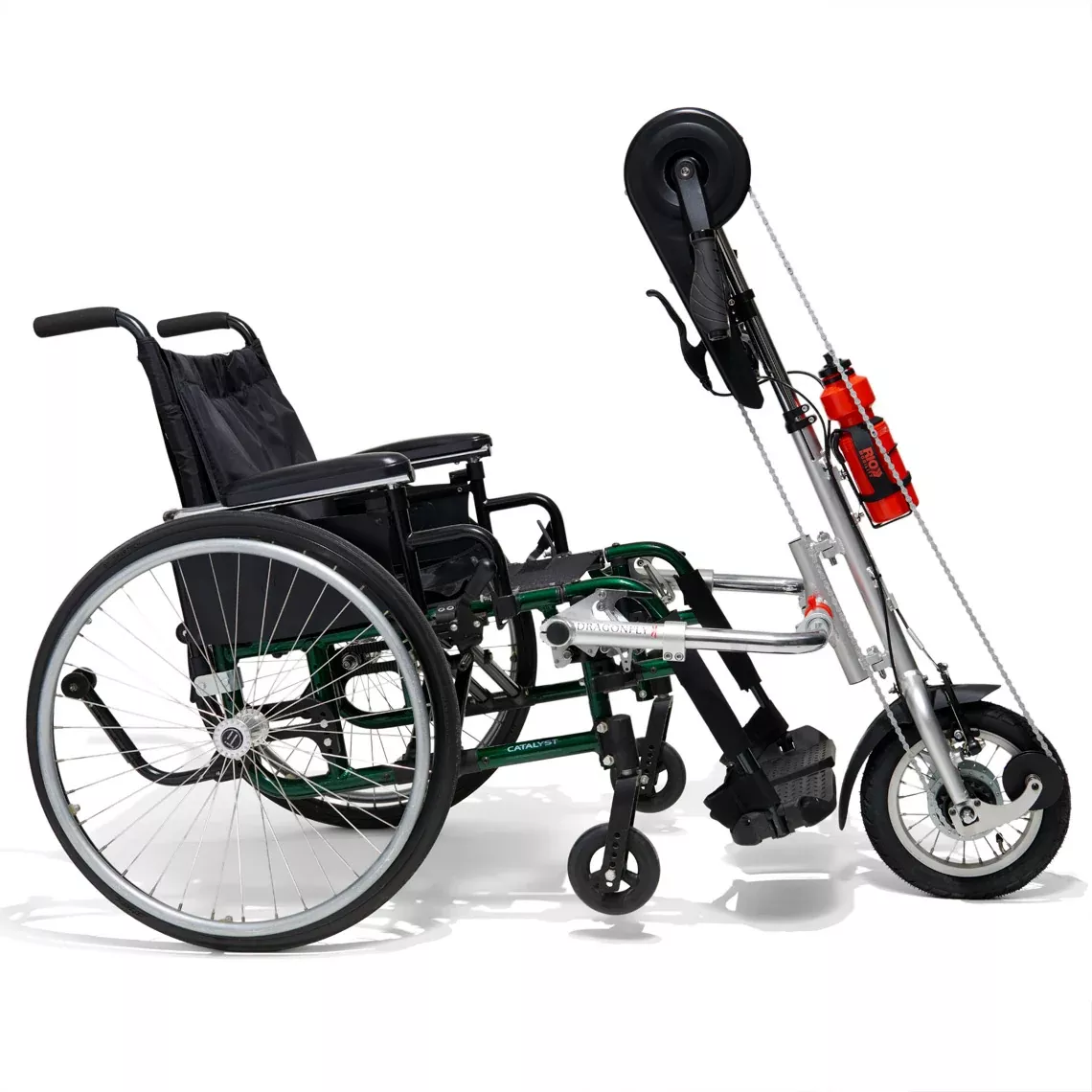
Dragonfly 2.0 – Nexus 8 Manual Handcycle
- Original price was: $1,259.40.$1,004.38Current price is: $1,004.38.
- Add to cart
-
- Sale!
- hot sale
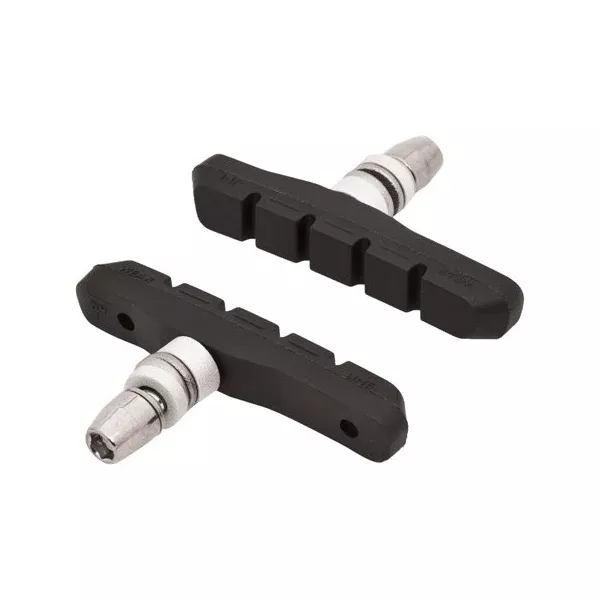
V-brake pads (Gen 2.0)
- Original price was: $7.16.$4.88Current price is: $4.88.
- Add to cart
-
- Sale!
- hot sale
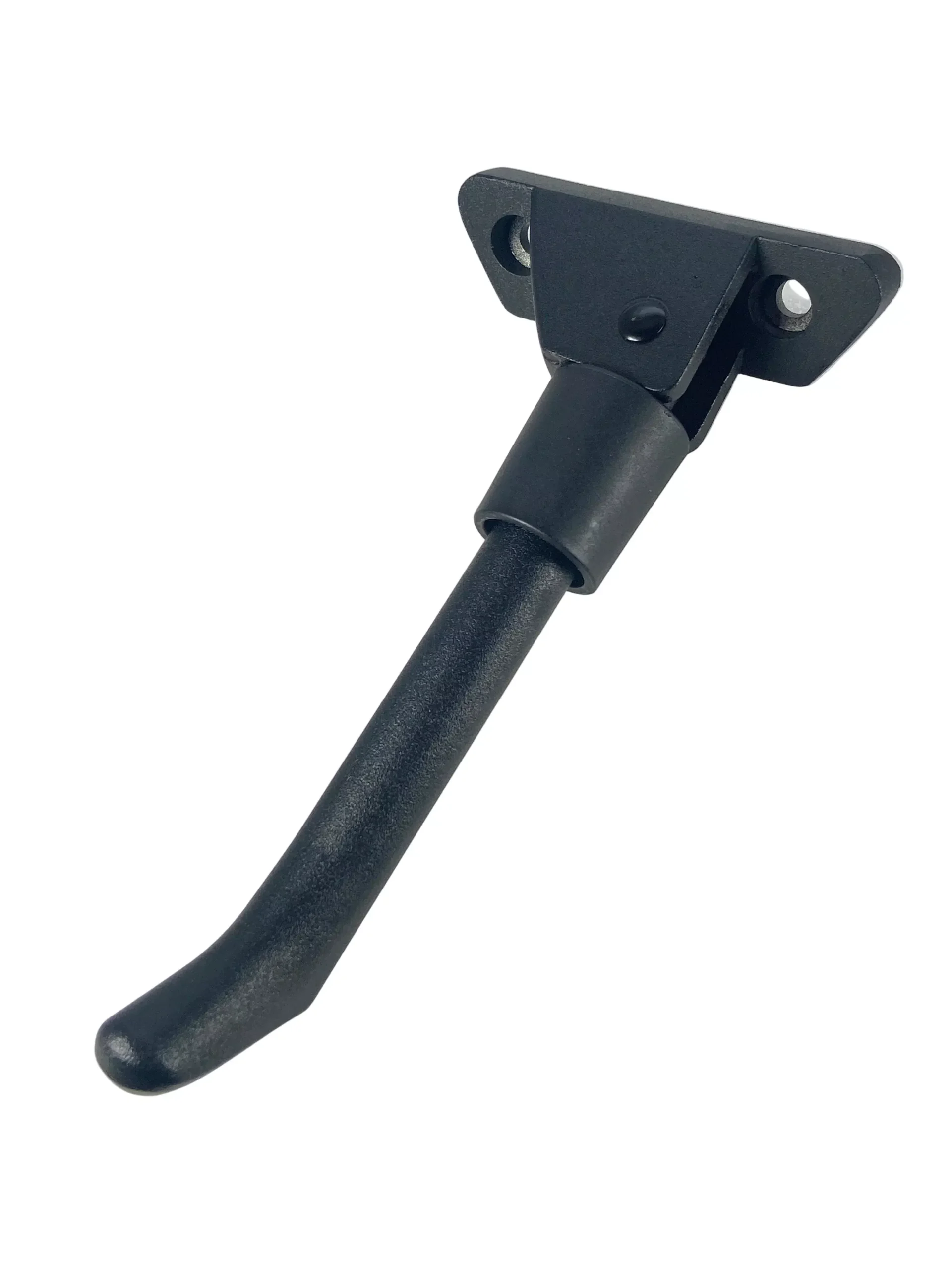
Yadea KS5 & KS5 Pro Kickstand – Genuine OEM
- Original price was: $7.20.$4.60Current price is: $4.60.
- Add to cart
-
- Sale!
- hot sale
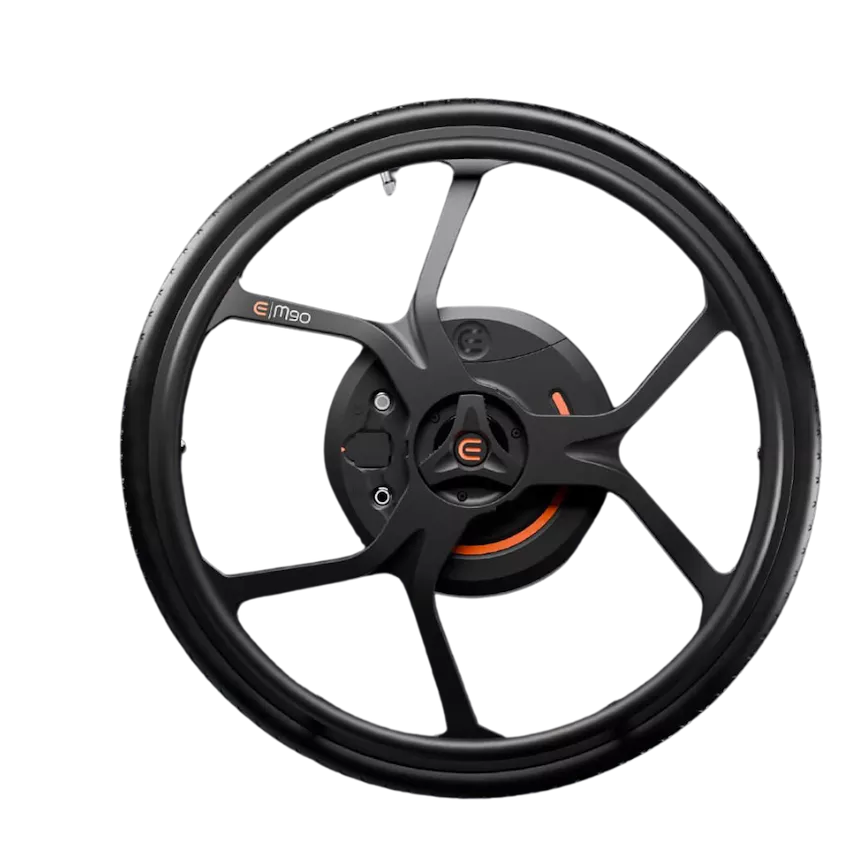
Empulse M90 Power Assist
- Original price was: $3,816.00.$2,767.31Current price is: $2,767.31.
- Add to cart
-
- Sale!
- hot sale
Empulse R20 Power Assist
- Original price was: $1,567.80.$1,164.94Current price is: $1,164.94.
- Add to cart
-
- Sale!
- hot sale
Coupler plate -QR attachment mechanism (sold per side)
- Original price was: $59.96.$39.98Current price is: $39.98.
- Add to cart
-
- Sale!
- hot sale
Cup Holder Universal Mount Kit
- Original price was: $28.80.$21.70Current price is: $21.70.
- Add to cart
-
- Sale!
- hot sale
eDragonfly 2.0 Electric Assisted Handcycle
- Original price was: $1,559.40.$976.86Current price is: $976.86.
- Add to cart